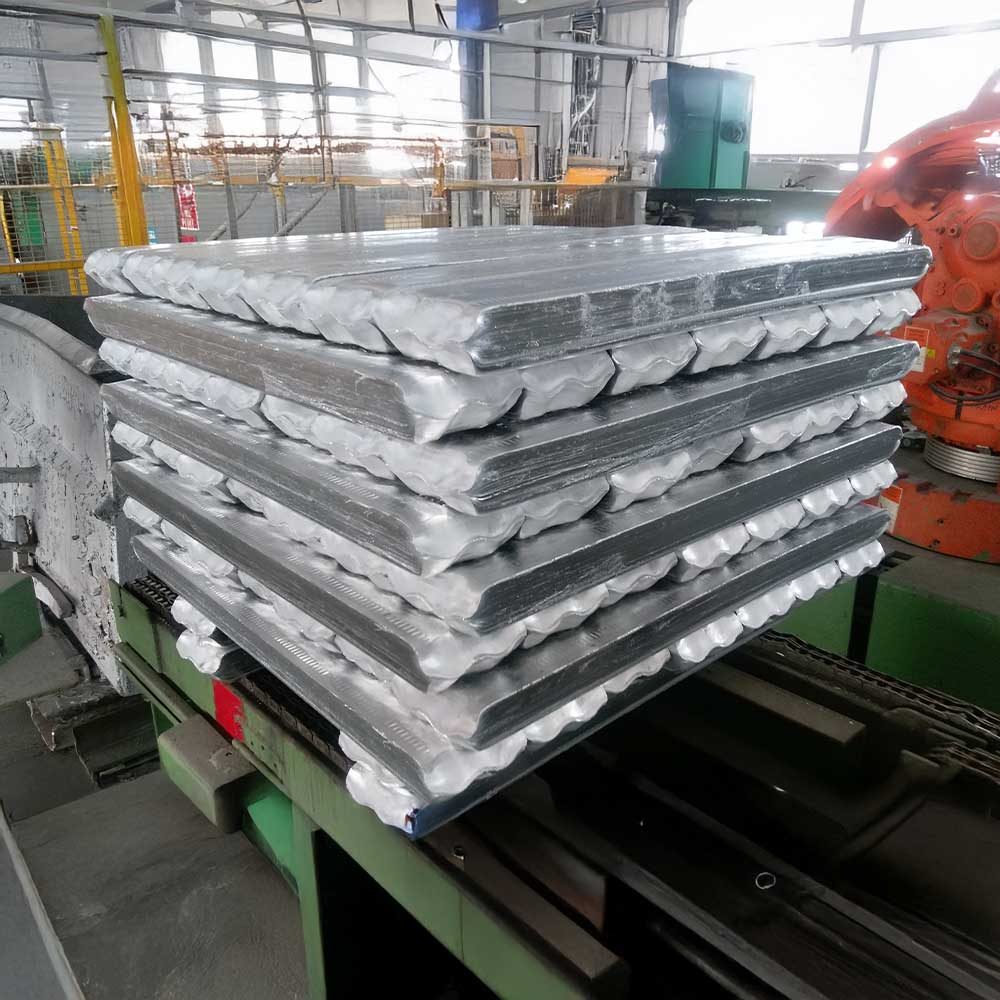
Aluminium Ingot palletizing is a tedious task. The ingots are heavy and sometimes hot. We specialize in Aluminium Ingot palletizing. Our customized grippers are capable of handling
- 10 KG ingots in a 7 Ingot pattern
- 22 KG ingots interlocked in a 5 Ingot pattern
We have provided solutions to top smelters such as Emirates Global Aluminium (EGA) in UAE and Aluminium Bahrain (ALBA) in Bahrain. These large smelters produce thousands of tonnes of aluminium ingots which are the palletized and shipped across the globe.
These highly customized grippers are very reliable. We use SS 304 materials for the frame construction and other specialized alloy steels for the wear and tear parts which are heat treated for long life.
Why Choose Synapse Robotics for Ingot Palletizing?
At Synapse Robotics, we bring deep expertise in industrial robotics, material handling automation, and foundry-grade systems. Our solutions are engineered for:
- Extreme heat environments
- Continuous 24/7 operations
- Heavy payload precision handling
- Reduced manpower dependency
Our systems are designed with industry-proven robotic arms, intelligent control systems, and advanced gripping technology, ensuring seamless integration with existing casting lines.
BENEFITS OF ROBOTIC INGOT PALLETIZING
- Special Robots with foundry specifications are used for durability in harsh environments like almunium smelters
- Gripper materials can be chosen to handle ingots fresh from the casting lines
- High level of reliability and increased uptime when compared to legacy hydraulic systems
- Precise and uniform stacking in an interlocked pattern for safety during transport
SUCCESFUL PROJECTS
YEARS OF EXPERIENCE
Key Features of Our Robotic Palletizing Systems

Foundry-grade industrial robots for harsh environments

Custom-designed grippers for different ingot sizes and weights

Heat-resistant components for handling hot ingots

Interlocking pallet patterns for transport stability

High throughput with consistent cycle times

Low maintenance compared to hydraulic systems
Advantages of Automated Palletizing
- Reduced labor costs and human fatigue
- Improved workplace safety in high-temperature zones
- Consistent pallet quality and stacking accuracy
- Increased production efficiency and uptime
- Scalable automation for growing smelter operations
Our Engineering Expertise
- Proven deployments in global aluminium leaders like
- Custom robotic gripper design
- Heat-resistant material engineering
- Foundry automation systems
- Trusted by large-scale smelters handling thousands of tonnes daily
Industries Served
-
Aluminium Smelters
Aluminium smelters produce Ingots 24/7 and robots tireless work to palletize them for trasport across the globe
-
Aluminium Foundries
Ingots are consumed by foundries and die casters for the manufacture of a variety of automotive components, consumer durable goods. Robots can be used for de-palletizing Ingots
FREQUENTLY ASKED QUESTIONS
Two configurations are currently in deployment: 10 kg ingots picked in a 7-ingot pattern, and 22 kg ingots picked in an interlocked 5-ingot pattern. These configurations are determined by the ingot dimensions and the required pallet pattern for transport stability. Custom configurations for other ingot weights and patterns can be engineered to suit specific smelter requirements.
Synapse Robotics has delivered systems to Emirates Global Aluminium (EGA) in the UAE and Aluminium Bahrain (ALBA) in Bahrain, two of the largest aluminium smelters in the world. These smelters produce thousands of tonnes of aluminium ingots that are palletized and shipped globally. These deployments demonstrate the system’s suitability for large-scale, continuous smelter operations.
The gripper frame is constructed from SS 304 stainless steel, which offers good corrosion resistance and structural integrity in the heat and chemical environment of an aluminium smelter. Wear and contact parts are made from specialized alloy steels that are heat treated for extended service life. This material selection ensures the gripper can handle ingots directly from the casting line where ingots may still be hot without rapid degradation of the gripping surfaces.
Standard industrial robots are not designed for the environment inside an aluminium smelter high ambient temperatures, airborne particulates (alumina dust, fluoride compounds), and radiant heat from casting lines degrade standard robot seals, lubricants, and electrical components rapidly. Foundry-grade robots are built to higher IP (ingress protection) ratings, use temperature-rated seals and lubricants, and have additional protective measures for motors and encoders, giving them the durability needed for reliable 24/7 operation in this environment.
An interlocked pallet pattern places ingots in alternating orientations between layers so that each layer locks the one below it, much like a brick wall. This prevents the stack from shifting or collapsing during handling and transport (after strapping) important for dense metal ingots that, if they shift, can cause pallet failure or injury during forklift handling. The 22 kg ingot configuration uses an interlocked 5-ingot pattern for precisely this reason. The robot’s precise, repeatable placement is what makes reliable interlocked stacking achievable at production speeds.
Aluminium smelters run continuously the electrolytic reduction process that produces aluminium cannot be easily stopped and restarted. This means the palletizing system must match the smelter’s continuous output without downtime. Foundry-grade robots are selected for their reliability in this environment, and the system is designed with appropriate redundancy in controls and maintenance access so that routine servicing does not require a production shutdown. Redundant robots are also used to reduce the downtime risk.