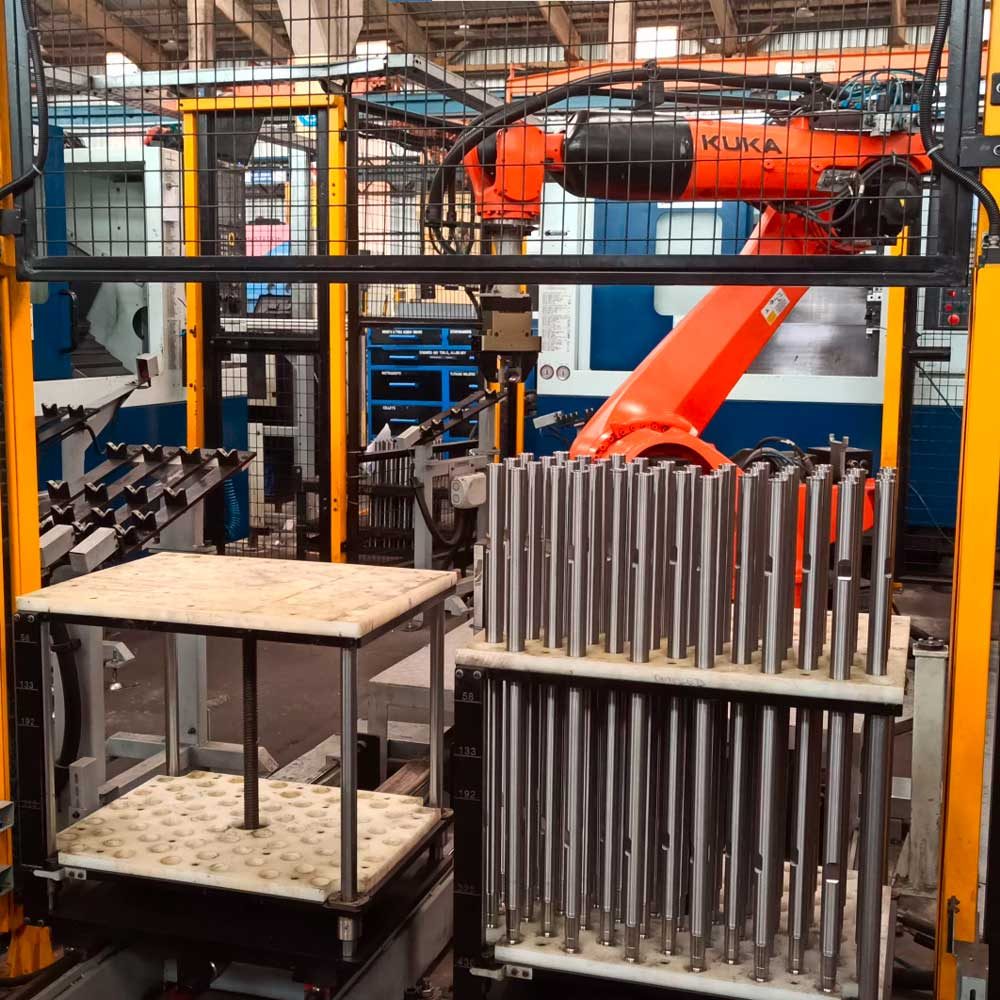
CNC Machine tending is economical if a robot services 2 to 3 turning centers or a combination of CNC’s and VMC’s. Robotic systems are also more flexible when compared to stand-alone autoloaders and gantry systems.
We provide system integration for robotic cells with the following
- In-feed & out-feed systems such as slat chain conveyors, accumulating conveyors, rotary tables, slide tables, belt conveyors, step feeders & bin feeders
- Vision based Bin picking systems
- Re-grip/flip stations, orientation fixtures, intermediate
- Inspection and part cleaning stations
- Pneumatic and Servo auto door option for machines
- Safety systems with Interlocking Gates
- Complete interfacing & interlocks with CNC machines
- Multi-gauging/Measurement systems with auto offset correction
- Secondary operations such as deburring
- Laser part marking and engraving
- QR Code reader integration, Part traceability & Rejection part marking
- Data availability for IOT and ERP systems
We recommend Robotic solutions for the following components
- For components with low cycle times where frequency of loading is high
- For components where the process is stable and frequent insert changes and offset corrections are not required
- For components which run on multiple machines and where the same gripper can handle the component through multiple operations
- For heavy components where operator loading is difficult and takes more than the allocated time and this causes unwanted machine idle time
- For components with higher cycle time where a single robot can serve 4-5 machines
- For components which have a machining cycle time of above 1 minute, a single robot can serve 3 spindles. This is a very efficient way of utilizing both the robot and the CNC machine. If the component machining times are 2-3 minutes or more, the robot can be better utilized to serve up to 4 machines by moving the robot on a 7th axis track.
Advantages of Robotic Cells
- Two or three robotic cells can be manned by a single operator. The loading frequency can be reduced by utilizing a variety of infeed systems
- Robots are also very user friendly and easily reprogrammable. Programming and understanding robots is much easier compared to CNC programming
- Robots are very reliable. With proper selection and maintenance, their life can be very long and easily be on par with that of a CNC Machine
- Our solutions are seamlessly integrated with the CNC machines. The machine controller is interfaced to our PLC. The signal exchange is through hardwiring or communication protocols. The Cell is handled through the HMI and the operator does not have to use the robot teach pendant
- For cells with multiple machines, we provide safety access doors for the individual machines, so that the output is not compromised during insert changes and offset corrections.
Typically the following machines can be serviced by robots
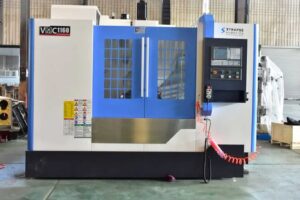
Vertical Machining Centers (VMC)
VMC's often have hihger cycle times and a single cell with multiple VMC's or a combination of turning centers and VMC's can be grouped together to form aproduct based cell
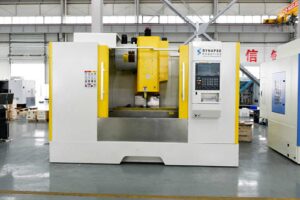
Horizontal Machining Centers (HMC)
HMC's are usually used for larger components which require heavy lifting. Robots can reduce the loading and unloading times thus improving the time available for metal cutting operations.
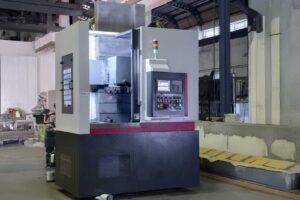
Vertical Turning Lathes (VTL)
VTS's are typically used for heavy valve components. Operators take additional time for loading and unloading heavy components using load assists and jib cranes.
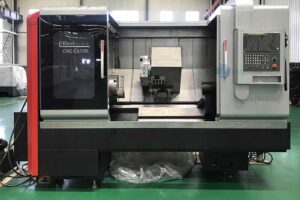
Turning Centers (CNC)
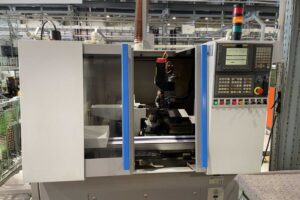
Gear Hobbing & Gear Grinding
Componets such as sprockets and gears need to be laoded in bulk to gear hobbing machines. Robots can run 24/7 to improve productivity
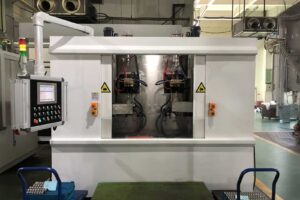
Induction Hardening Machines
Robotic loading of induction hardening machines saves the operators from smoke inhalation and exposure to hot components
PART TRACEABILITY
SUCCESFUL PROJECTS
YEARS OF EXPERIENCE
Industries Served
-
Automotive
Cut bits, Cast, forged and die cast components can loaded to machines using robots. Typical high volume auto components provide the max benefits when loaded by robots
-
Aerospace
Machines used in aerospace component machining are very capital intensive. Robotic loading increases metal cutting time thus maximizing productivity
-
Medical Devices
High precision medical devices need complex machining and gentle handling. Implants, orthotic devices and medical instruments handled by robots reduces surface defects and improves quality
-
Oil & Gas
Heavy components such as hangars, bonnets and valve components used in the oil & gas industry are ideally suited for high payload robots.
-
Textile & General Industry
Textile machinery requires hundreds of CNC machined components and robotic tending is a sure way to ensure on time delivery and absorbing the fluctuations created due to seasonal demand.
FREQUENTLY ASKED QUESTIONS
The number of machines a single robot can serve depends on the component’s machining cycle time. For components with a cycle time above 1 minute, a single robot can comfortably serve 3 spindles. For cycle times of 2 to 3 minutes or more, the robot has sufficient idle time to move between 4 machines on a 7th axis track. A basic robotic tending cell is economical when the robot is servicing 2 to 3 turning centers, or a combination of CNC and VMC machines.
A 7th axis track is a linear rail that allows the robot to travel between machine positions rather than being fixed in place. It extends the robot’s effective working range, enabling a single robot to service up to 4 or 5 machines. It is most useful when component cycle times are 2 to 5 minutes or more, giving the robot enough time to travel between stations and still complete loading and unloading without creating a bottleneck.
Robotic tending is recommended for: components with
1.Short cycle times where the loading frequency is high. Maximum productivity improvements can be achieved for short cycle time components
2.Stable machining process where frequent tool insert changes or offset corrections are not required.
3.Components that run on multiple machines where the same gripper can handle the part through multiple operations
4.Heavy components where manual loading takes longer than the allocated time and causes machine idle time
5.Components with longer cycle times where a single robot can efficiently serve 4 to 5 machines.
Turning centers (CNC lathes), Vertical Machining Centers (VMC), Horizontal Machining Centers (HMC), Vertical Turning Lathes (VTL), gear hobbing machines, gear grinding machines, and induction hardening machines can all be tended robotically. VMCs with higher cycle times are often grouped with turning centers to form a product-based cell. HMCs are typically used for larger, heavier components where robot loading reduces the time otherwise spent by operators using load assists and jib cranes.
No. The cell is managed through an HMI (Human Machine Interface). The robot controller is interfaced to the cell PLC via hardwiring or communication protocols, and the operator controls the entire cell from the HMI without needing to interact with the robot teach pendant.
For cells with multiple machines, individual safety access doors allow operators to perform insert changes and offset corrections on one machine without stopping the rest of the cell. This improves OEE as insert change intervals vary from machine to machine.
Secondary operations that can be integrated include: deburring, laser part marking and engraving, QR code reading for part traceability, rejection part marking, multi-gauging, and part cleaning stations. Integrating these within the robot cycle eliminates separate manual operations and keeps parts moving without additional handling.
CNC Machine frequent require offset corrections to compensate for insert wear. This is the case for steel and casting machining. Castings also have blow holes which may cause insert chipping. Unattended robotic cells may produce mass rejections in case of tool wear or chipping. Auto-gauging stations are deployed to replace manual inspection. Every part can be measured or the frequency can be set-up in the HMI. Once the part is measured, an algorithm analyses the trend and automatically sends the offset values to the CNC controller thus minimizing rejections.
Available infeed and outfeed systems include slat chain conveyors, accumulating conveyors, rotary tables, slide tables, belt conveyors, step feeders, bin feeders, and vision-based bin picking systems. Re-grip and flip stations, orientation fixtures, and intermediate storage positions can also be incorporated depending on the component’s entry orientation and the sequence of machining operations.
Part traceability is supported through laser marking systems integrated with QR code readers. Each part can be laser-marked with a unique identifier and the QR code reader verifies the mark. Rejection parts are automatically separated and marked with rejection data. This means every part can be traced back to the specific machine it was processed on, which is important for quality management in automotive, aerospace, and medical component manufacturing.
Robotic systems are more flexible than standalone autoloaders or gantry systems. Autoloaders are typically configured for a single component type and one machine. Gantry systems have limited reach and degrees of freedom. A robot can be reprogrammed for new components relatively quickly, can reach multiple machine positions, can perform complex orientation and re-gripping tasks, and can integrate secondary operations within the same cycle. Programming and understanding robots is also described as simpler than CNC programming, making the system more accessible to operators.
Automotive manufacturing is the primary driver — cut bits, castings, forgings, and die-cast components produced in high volumes provide the clearest economic case for robotic tending. Aerospace component machining uses capital-intensive machines where maximising cutting time is critical. Medical device manufacturing requires precision and gentle handling to avoid surface defects. Oil and gas applications involve heavy components such as valves and hangers suited to high-payload robots. Textile machinery manufacturing requires large numbers of CNC-machined components with seasonal demand fluctuations.