
Tyres are bulky and awkward to handle. All tyres go through a 100% inspection process before dispatch. Two wheeler tyres have to be tested for both imbalance and trueness (runout/phaseout). Typically an operator handles around 800 tyres per shift putting them through imbalance and trueness testing machines. Considering an average weight of 4 kg per tyre and 3 picks and places to process each tyre, the cumulative weight handled is around 10 tonnes/day. This repeated handling results is a lot of fatigue for the operators. There are severe productivity losses towards the end of each shift.
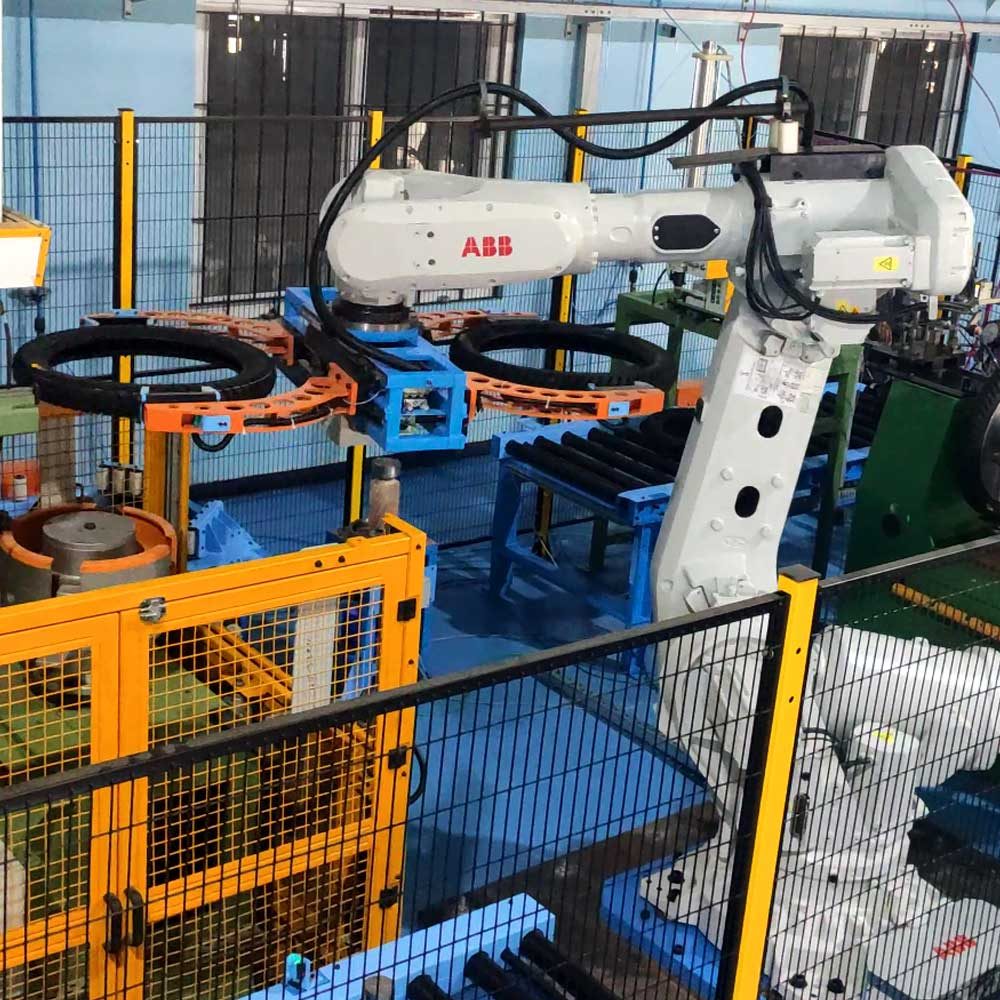
Robots are ideally suited for this application. The tyres are fed from the previous manual inspection stations on an infeed conveyor and the robots take care of the rest. The tyres are fed to the imbalance machines and then the trueness testing machines.The tyres that pass the tests are marked and sent to the next process on an outfeed conveyor. The rejected tyres are separated based on the type of rejection and a printer is used to print the reject data on the tyres. These tyres can then be reworked or scrapped based on the type of defects.
IMPROVE PRODUCTIVITY BY 30%
SUCCESFUL PROJECTS
YEARS OF EXPERIENCE
Industries Served
-
Tyre & Rubber
Applications such as trueness, runout and balance testing, Green Tyre(GT) sheet handling, curing press loading, marking and labeling are some of the applications suitable for robotic automation
FREQUENTLY ASKED QUESTIONS
An operator handling two-wheeler tyres through imbalance and trueness testing machines processes approximately 800 tyres per shift. With an average tyre weight of 4 kg and 3 picks and places required to process each tyre, the cumulative weight handled reaches around 10 tonnes per day. This level of repeated physical exertion causes significant fatigue over the course of a shift, with productivity dropping measurably towards the end as operators slow down. Robotic automation eliminates this fatigue entirely.
Robotic installations typically boost productivity by approximately 30% compared to manual operation. This improvement comes from consistent cycle times throughout the shift — the robot does not slow down due to fatigue the way a manual operator does after hours of handling tyres that can weigh up to 6 kg each.
Tyres arrive from previous manual inspection stations on an infeed conveyor. The robot picks each tyre and loads it to the imbalance testing machine, then transfers it to the trueness testing machine (checking for runout and phaseout). Tyres that pass both tests are marked and sent to the next process on an outfeed conveyor. Rejected tyres are separated by rejection type, and a printer prints the rejection data directly on the tyre so that each rejected unit can be assessed for rework or scrap based on the specific defect.
Rejected tyres are automatically separated from the passing population by the robot, based on the test result received from the testing machine. A printer prints the rejection data directly on the tyre body. The type of rejection determines whether the tyre is routed for rework or scrapped. This automated separation and labelling ensures traceability and prevents rejected tyres from inadvertently passing to the next process.